
Last reviewed: August 19, 2026. Rail operations, stations and departure times change by date; confirm the issued itinerary rather than relying on a generic timetable.
There are two main ways to reach Machu Picchu: travel by rail to Machu Picchu Pueblo and continue to the entrance, or enter through the regulated Inca Trail. Other treks—including Salkantay and Inca Jungle—are distinct journeys that connect with the Machu Picchu area through their own final transport and walking arrangements.
Routes to Machu Picchu compared
| Route | Typical format | Best for | Main constraint |
|---|---|---|---|
| Train | Road transfer + rail + bus or walk | Comfort, limited time, broad accessibility | Separate tickets and fixed schedules must align |
| Classic Inca Trail | Multi-day regulated trek | Archaeology, camping and direct trail arrival | Named permits, limited capacity and fixed dates |
| Short Inca Trail | One hiking day plus overnight/visit | Inca Trail experience with less camping | Still requires a regulated permit and sustained steps |
| Salkantay | High-mountain multi-day trek | Scenery, physical challenge and permit flexibility | Does not use the same direct sanctuary approach as the Inca Trail |
| Inca Jungle | Multi-activity route | Travelers seeking varied adventure activities | Experience and final logistics differ by operator |
Option 1: train from Cusco or the Sacred Valley
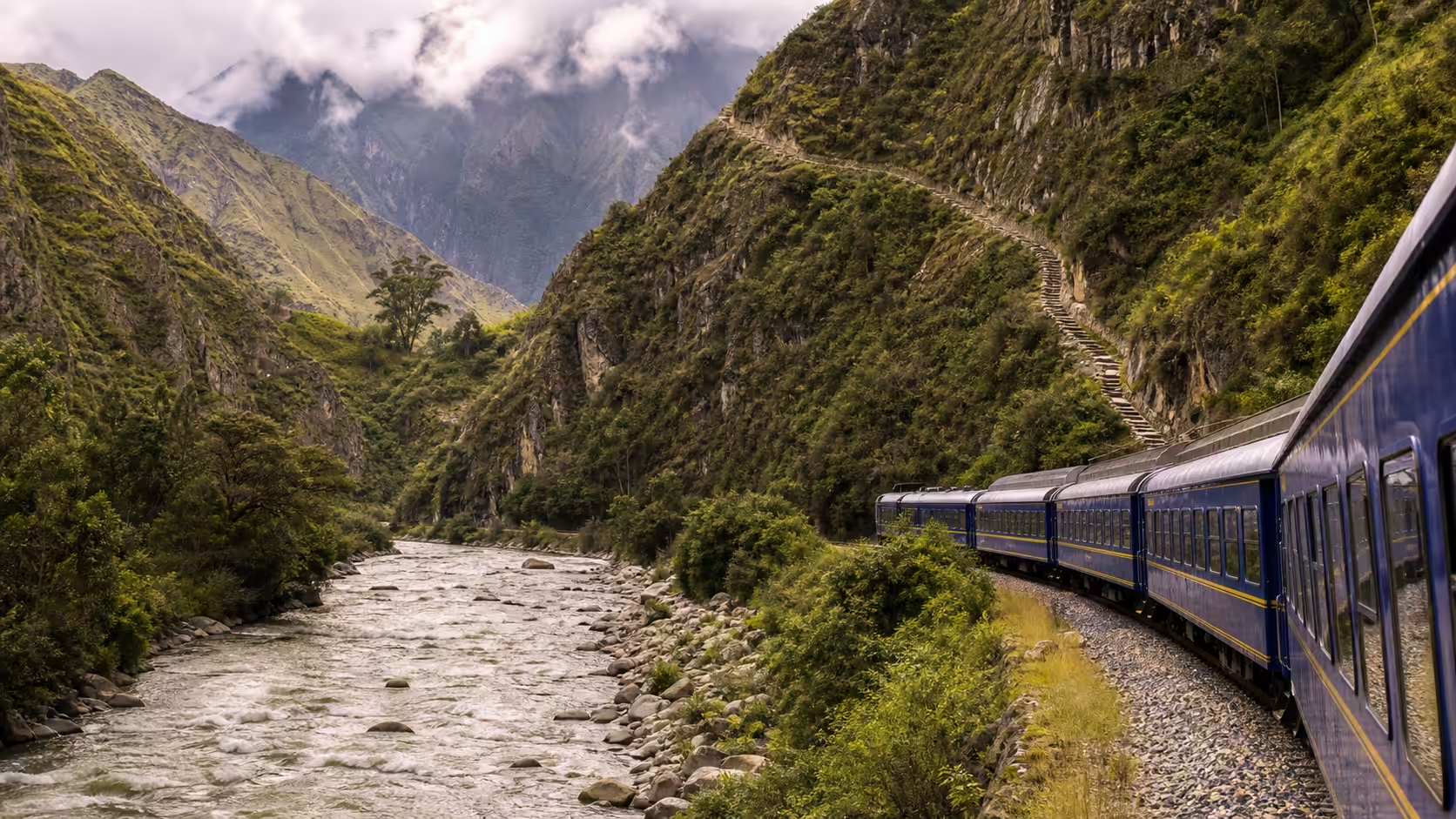
Most rail journeys begin with a transfer from Cusco to a station such as Wanchaq/Pachar, Poroy or Ollantaytambo, depending on the operator, season and selected schedule. PeruRail’s published 2026 timetable shows both rail-only and bimodal bus-plus-train services. Read the ticket carefully: “Cusco” can refer to a combined service rather than a train departing the historic center.
At Machu Picchu Pueblo, travelers continue to the sanctuary entrance by shuttle bus or a steep pedestrian route. The entrance ticket has a fixed circuit, route, date and time, so leave enough margin between the train arrival and your admission.
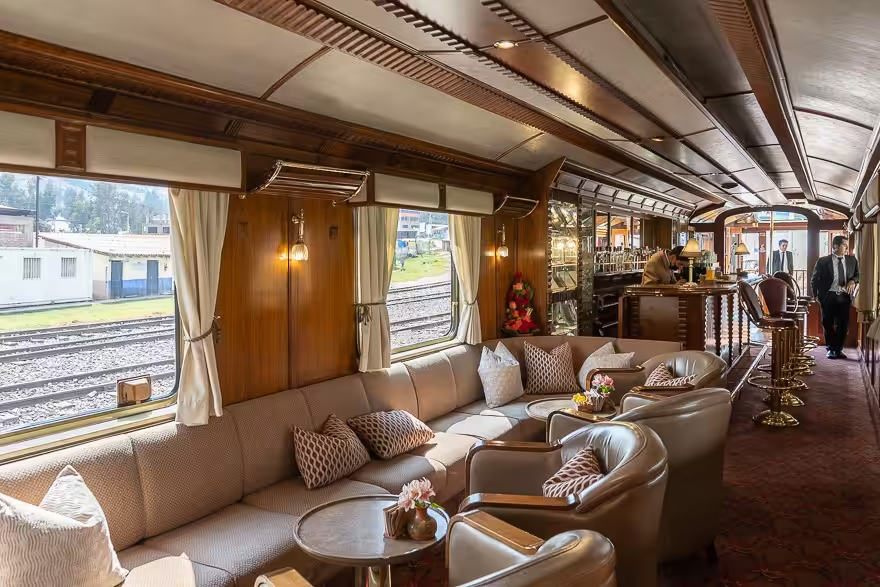
For a coordinated option, compare Machu Picchu train tours. A Hiram Bingham journey changes the onboard service, not the need to match the official entrance.
Option 2: the Classic Inca Trail
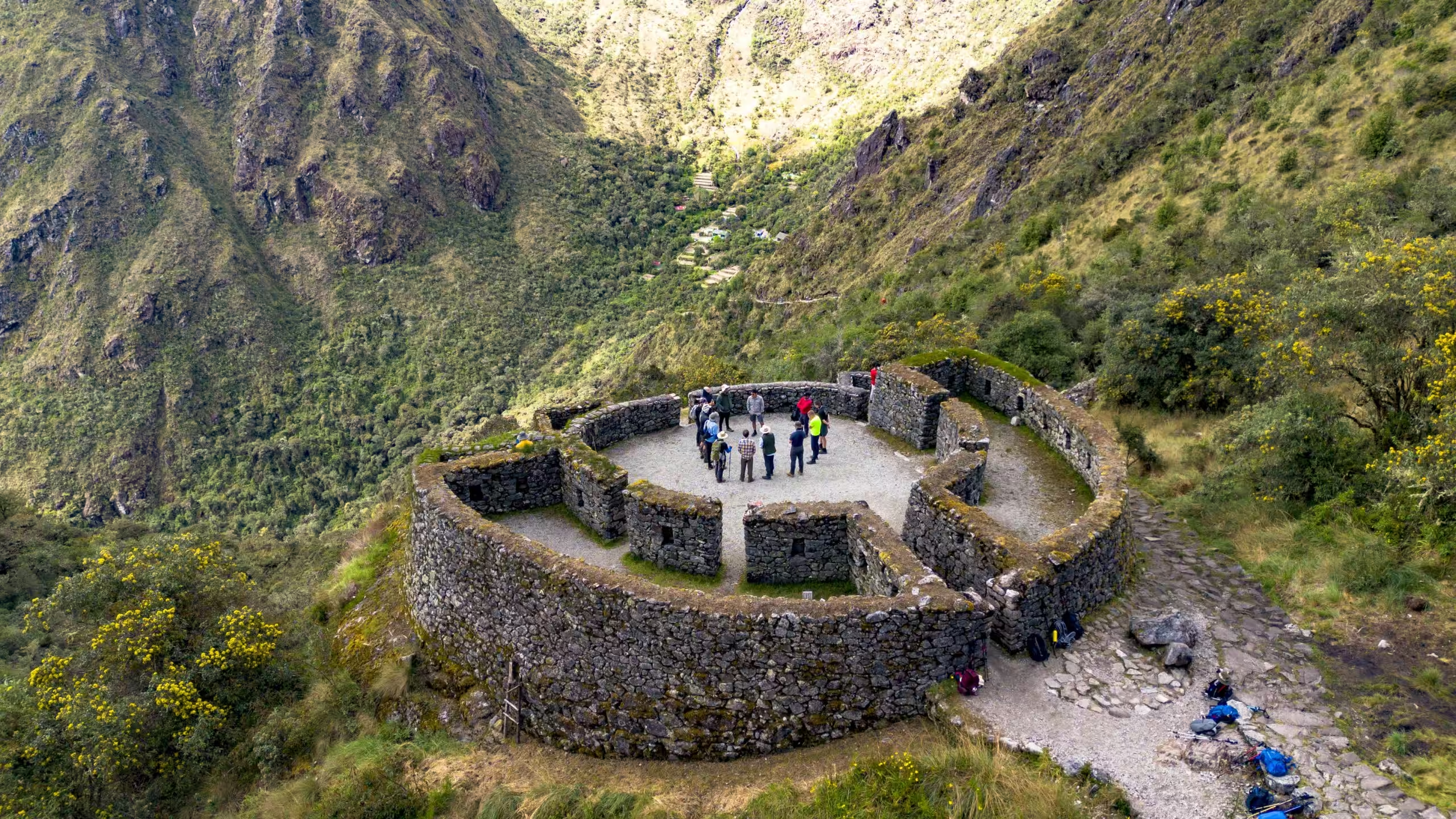
The Classic Inca Trail is a regulated multi-day route through archaeological sites and mountain passes. Access is limited and arranged through authorized operators for identified travelers. For 2026, the Ministry of Culture opened advance reservations through the official system, and the trail closed during February for annual conservation before reopening in March.
Start with the Inca Trail tour comparison and the source-dated permit guide. Do not book flights or non-refundable hotels around an assumed permit.
Option 3: the Short Inca Trail
The short route generally begins near kilometer 104 and includes sustained stone steps, archaeological sites and a first approach toward Machu Picchu. It suits travelers who want a real Inca Trail segment without the full classic camping format, but “short” does not mean flat or effortless.
Option 4: Salkantay Trek
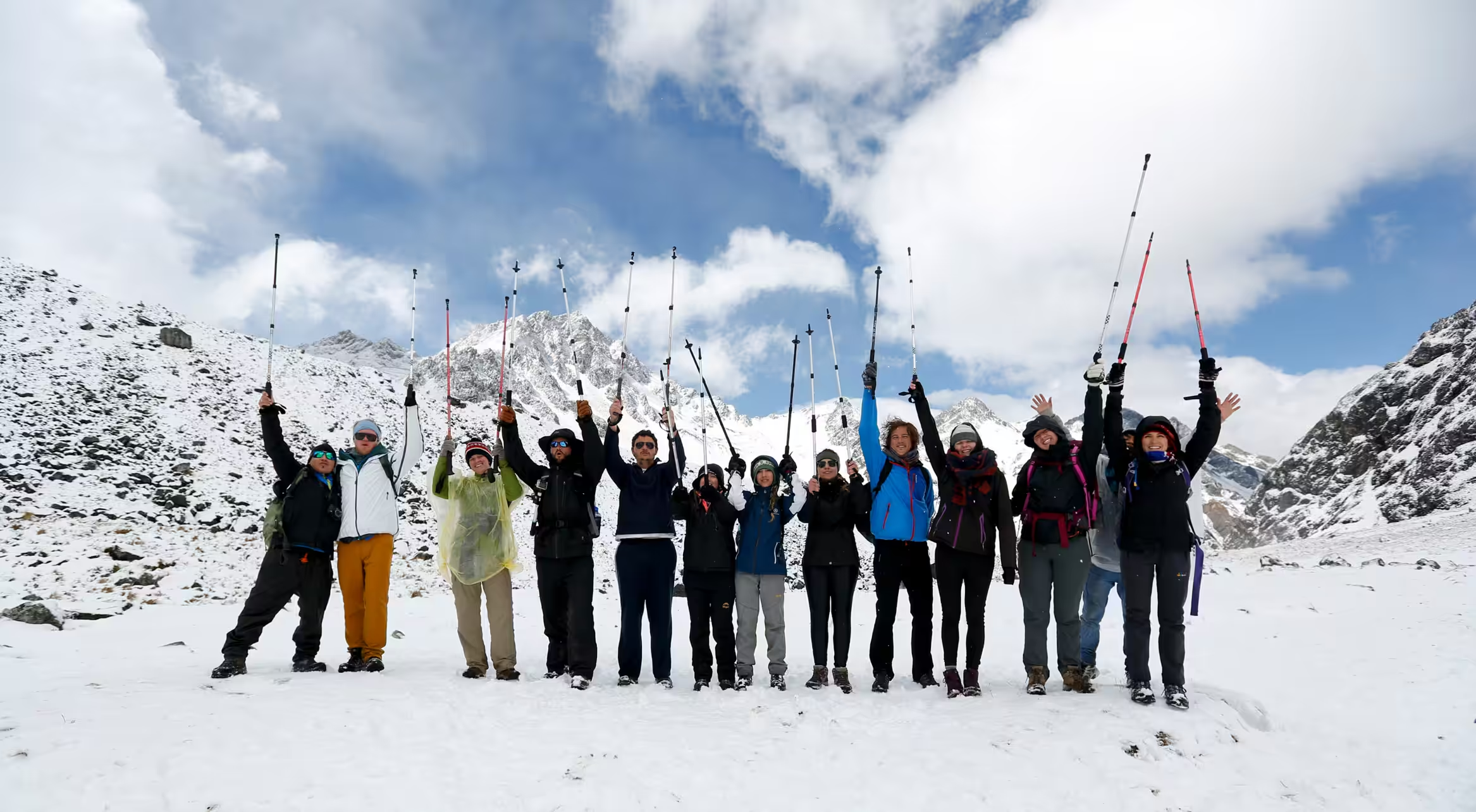
Salkantay crosses a high Andean pass and descends toward warmer valleys. It does not use the same regulated Inca Trail quota and does not replicate the direct historical approach through Intipunku. It can be the better choice when mountain scenery and a stronger physical challenge matter more than trail archaeology. Compare our Salkantay Trek options.
Option 5: Inca Jungle and other approaches
Inca Jungle itineraries combine activities and overland sections before reaching the Machu Picchu area. Product quality depends heavily on the operator’s safety standards and exact inclusions. Read the day-by-day plan, not only the route name, and see our Inca Jungle tours.
The correct booking order
- Choose the Machu Picchu circuit or trek experience that matters most.
- Confirm the official entrance or Inca Trail permit for the exact traveler names.
- Match rail, private transfers and accommodation to the confirmed entry time.
- Add schedule margin, especially during the rainy season or on separate tickets.
- Keep passport details consistent across every reservation.
Avoid the common failure: buying a cheap train first and discovering later that the available Machu Picchu circuit or entry time cannot be reached comfortably.
Frequently asked questions
Can you drive directly from Cusco to Machu Picchu?
No conventional road reaches the citadel entrance from Cusco. Most visitors combine road and rail to Machu Picchu Pueblo, then use the shuttle bus or the steep pedestrian path to the entrance.
What is the easiest way to reach Machu Picchu?
A coordinated train journey with transfers and an overnight near the rail route is the lowest-effort option for most travelers. The exact station depends on the service and season.
Which trek enters Machu Picchu directly?
The regulated Inca Trail is the classic route that enters the sanctuary on foot. Alternative treks such as Salkantay connect to the Machu Picchu area but use different final logistics.
Primary and official sources
- PeruRail official route and operational notices
- Ministry of Culture: official Machu Picchu ticket process
- Ministry of Culture: 2026 Inca Trail and Machu Picchu reservations