
The Sacred Valley in Peru is best explored as a journey between selected places, not a race through every attraction. Give it one day for two or three stops, or two days to combine Inca sites, towns and local craft traditions at a gentler pace. If Machu Picchu comes next, finish in Ollantaytambo and organize your train connection around that endpoint.
This guide focuses on choosing a workable route. For the complete journey from Cusco to the citadel, see our guide to getting to Machu Picchu.
Where is the Sacred Valley, and what should you see?
The Sacred Valley is a region near Cusco, not a single archaeological site. PROMPERÚ highlights Pisac, Ollantaytambo, Chinchero, Maras and Moray among its principal destinations. Their appeal differs, so begin with what interests you rather than the longest list of inclusions.
| Stop | Best reason to include it | Planning choice |
|---|---|---|
| Pisac | Archaeology and time in the town | Ask whether the itinerary includes the archaeological site, the town, or both. |
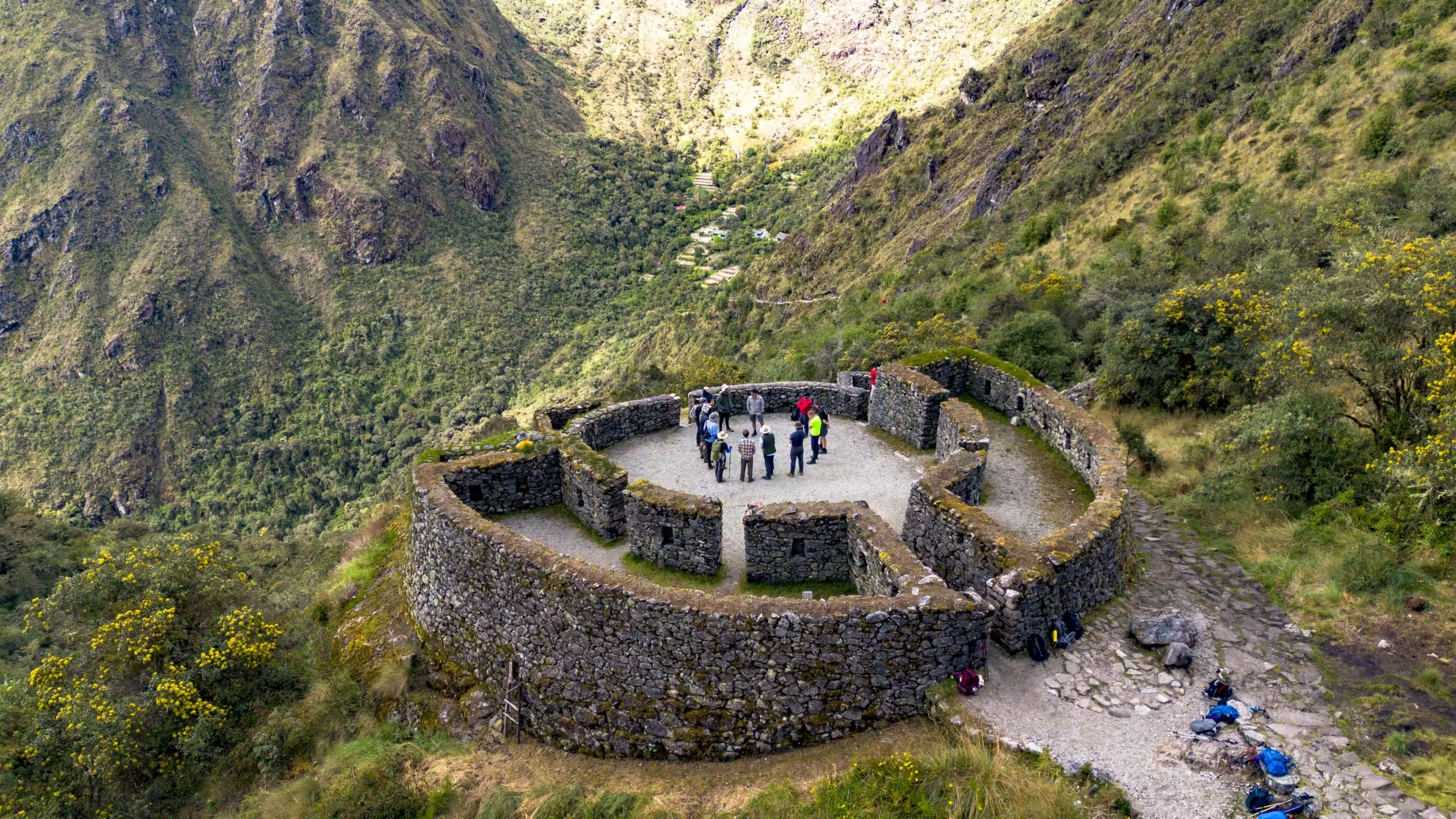
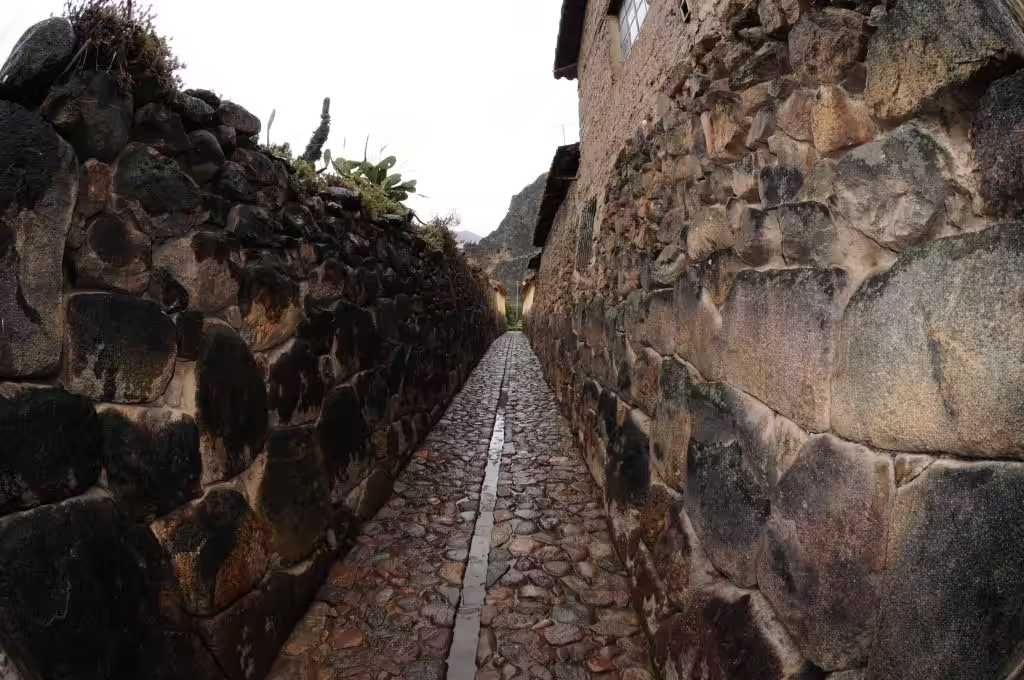
| Ollantaytambo | Inca architecture and a walk through the old streets | Leave a separate buffer for reaching the railway station. |
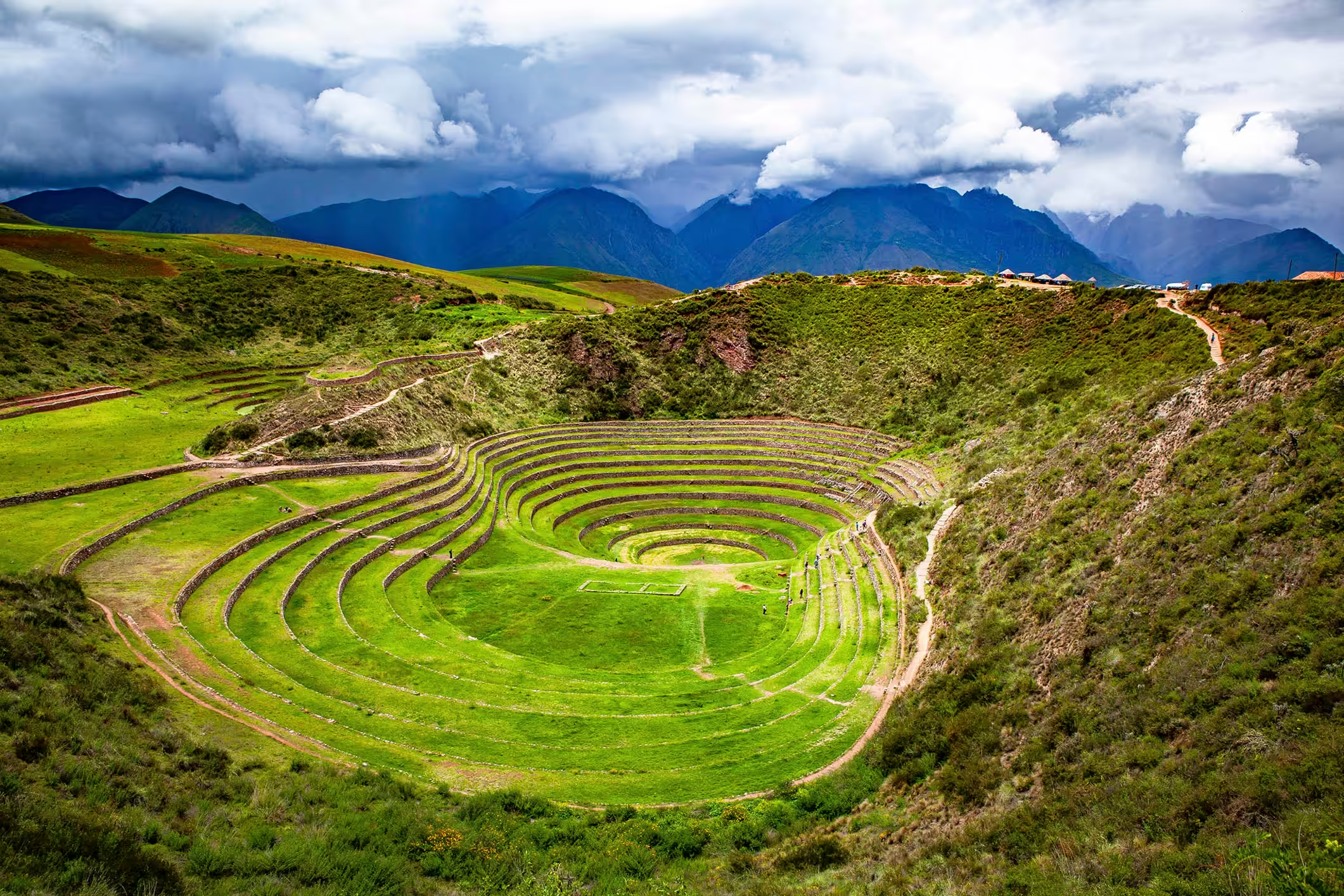
| Moray | The striking circular terrace landscape | Combine with the Maras area instead of crossing the whole valley again. |
| Maras | The salt-pan landscape | Check the current entrance arrangements separately. |
| Chinchero | History and textile traditions | Clarify whether a stop is a guided cultural visit, a workshop or shopping time. |
A one-day Sacred Valley itinerary
For a first visit, consider Pisac → a relaxed lunch stop → Ollantaytambo. This is a planning suggestion, not a fixed departure schedule. Ask your driver or guide to check the order against your hotel, road conditions and any train reservation.
Morning: make Pisac a real visit
Choose whether you care most about the archaeological landscape or time in town. Trying to add both to an already crowded morning can turn the rest of the day into hurried photo stops. Tell your guide about mobility limitations before choosing a walking route; a scenic stop and a full archaeological exploration are different experiences.
Midday: preserve time for lunch
Check whether lunch is included, where it takes place and whether the restaurant can accommodate your dietary requirements. A valley tour is not better simply because it has more named stops. One unhurried meal and two substantial visits may suit you more than a day spent constantly getting back into a vehicle.
Afternoon: Ollantaytambo, with a clear endpoint
Visit the site if it is part of your plan, then leave time for the town. Decide in advance whether you are returning to Cusco, staying overnight or catching a train. These are three different transport arrangements; do not assume the standard tour includes whichever one you need.
A two-day itinerary with less backtracking
Use the second day to separate the valley’s main groups of stops. This example works best with a valley overnight and should be adjusted to your hotel and onward transport.
- Day 1: Pisac and a valley stay. Keep the sightseeing focused, then use the remaining afternoon for your accommodation rather than adding a long detour.
- Day 2: Chinchero, Moray or Maras, then Ollantaytambo. Pick the stops that matter most; including all three plus a full Ollantaytambo visit requires a longer day. End at your overnight base or station only after allowing connection time.
If textiles are your priority, preserve workshop time. If archaeology matters most, reduce shopping stops. If you are traveling with children or someone who tires easily, ask for fewer vehicle changes and shorter walks. Those adjustments usually matter more than choosing a tour labeled “complete.”
Tickets, transfers and costs to confirm
Request an itemized quote covering transport, guide, entrance tickets, lunch and your final drop-off. Where the Cusco tourist ticket is used, confirm the exact ticket type and validity for your chosen sites. Do not assume that a regional sightseeing ticket includes every attraction, a salt-mine entrance or admission to Machu Picchu.
For a same-day train connection, share the actual ticket with the operator. Ask them to confirm the station, boarding requirements and luggage plan in writing. Cusco’s tourism authority reported access and congestion issues around this circuit in July 2026; that is a reason to allow margin, not a prediction that your journey will be delayed.
Where to stay and how to pace arrival
Ollantaytambo is a practical choice when the train is your next step. A different valley hotel may suit a quieter stay, but check its actual position rather than relying on “Sacred Valley” in the name. A remote property can add substantial driving to an early departure.
Do not make a demanding sightseeing day your automatic arrival plan. The CDC recommends gradual ascent and avoiding heavy exercise during the first 48 hours at altitude. A valley overnight is not a guarantee against altitude illness; discuss personal concerns with a qualified clinician.
What to bring
Carry comfortable walking shoes, a removable warm layer, rain protection, sun protection, drinking water and a small day bag. Bring the identification and payment method required for your tickets. Keep train documents accessible, and arrange storage for larger suitcases before the sightseeing day starts.
To fit this visit into the wider trip, compare our three-, five- and seven-day Machu Picchu routes. If you want an overnight train-based visit, review the two-day Machu Picchu train tour and ask how a Sacred Valley day can be coordinated separately.
Frequently asked questions
Is the Sacred Valley worth visiting before Machu Picchu?
Yes, if you want more context for the Inca landscapes and settlements around Cusco. A separate valley day also lets you explore Ollantaytambo without reducing it to a train connection. Choose two or three stops rather than trying to see everything.
How many days do you need in the Sacred Valley?
One day works for a focused route. Two days let you separate Pisac and Ollantaytambo from Chinchero, Moray and Maras, with less time pressure. Add an overnight if you want a slower pace or have a morning train from Ollantaytambo.
Should I stay in Cusco or the Sacred Valley?
Choose Cusco for city walks, restaurants and museums; choose a valley base for a quieter stay or simpler access to an Ollantaytambo train. Compare the exact hotel location, elevation and transfer time, because the valley is a region rather than one town.
Is the Sacred Valley the same as Machu Picchu?
No. A Sacred Valley sightseeing day and a Machu Picchu visit are different itinerary components. A valley tour does not automatically include the train, bus or timed admission needed for Machu Picchu.
Can I tour the Sacred Valley and take the train the same day?
It can work when the sightseeing route ends in Ollantaytambo and the train is booked late enough. Confirm the station, luggage arrangements, boarding deadline and a road-delay buffer before paying. An overnight is preferable when the connection would otherwise be tight.
Sources checked: September 22, 2026. Prepared from the linked official sources and published itinerary information. Conditions, availability and booking inclusions must be reconfirmed for your date. See our editorial policy.
Build a valley day around your trip
Tell us your hotel, preferred stops and next train or overnight base. We can confirm a route and quote for your dates.